Skip to content
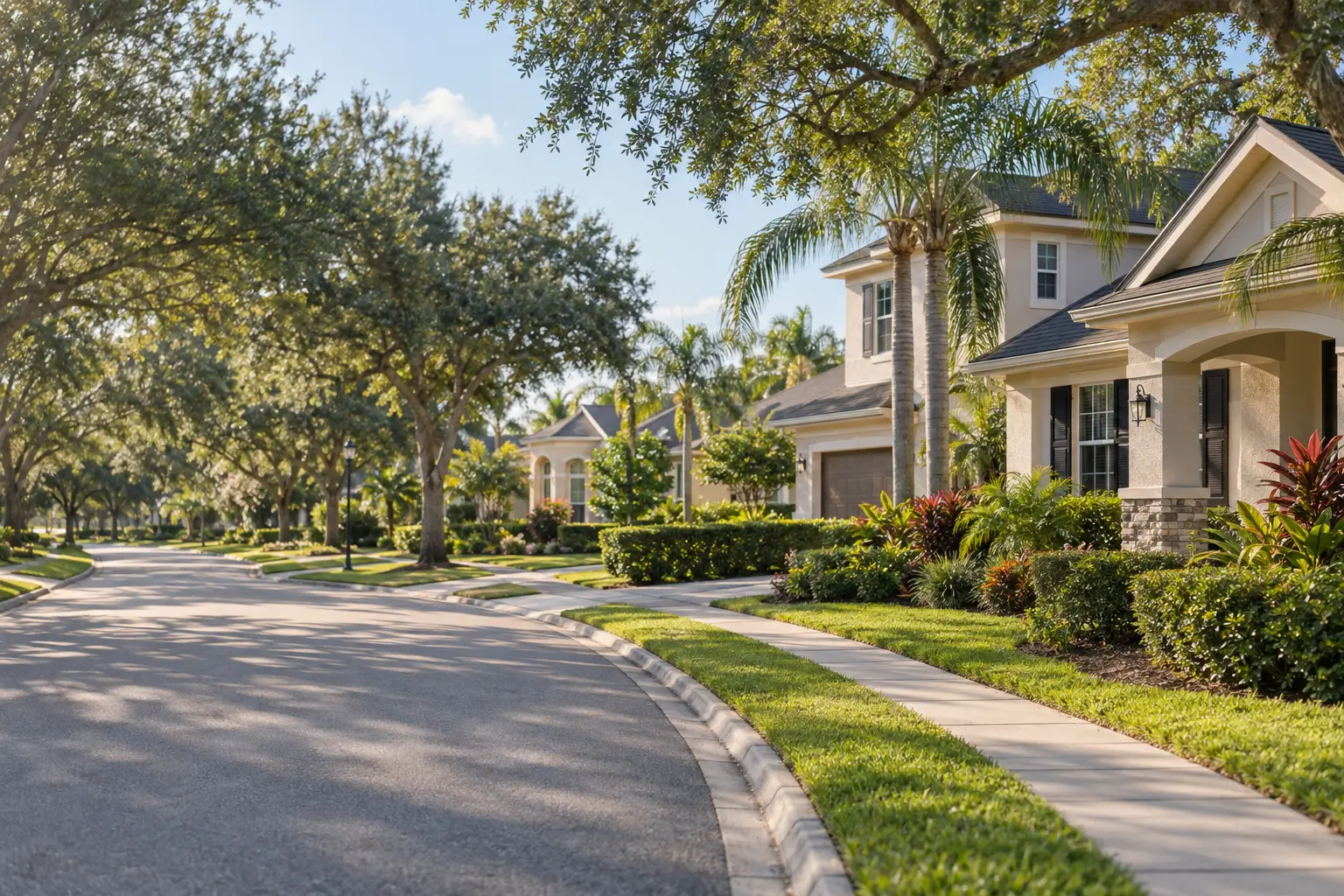
Palm-lined Florida residential street with landscaped lawns and light-colored stucco homes in natural daylight.

Florida buyer guide

Florida property tax: a buyer's guide

Florida has local property taxes, but no personal state income tax. We explain ownership costs for primary residences, second homes and investment properties.

How your Florida property-tax bill is calculated

Florida property tax is charged by counties, municipalities, school districts and special districts. There is no single statewide rate. To understand a bill, start with three values:

  • Just value: the property's market value.
  • Assessed value: the value after any applicable assessment limits.
  • Taxable value: assessed value minus applicable exemptions.

Each taxing authority applies its own rate, called a millage rate, to the taxable value. One mill means $1 of tax for every $1,000 of taxable value.

A worked example

Suppose a home has a taxable value of $400,000, no exemptions and a combined rate of 15 mills. These are illustrative figures, not a rate or estimate for a particular Florida home.

  1. Divide the taxable value by 1,000: $400,000 ÷ 1,000 = 400.
  2. Multiply by the millage rate: 400 × 15 = $6,000 in value-based property taxes.
  3. If the bill also includes $500 in separate assessments, add those: $6,000 + $500 = $6,500 for the annual bill.

This simplified example uses the same taxable value for every levy. In practice, school and non-school taxable values can differ because exemptions apply differently, so calculate each authority's charge separately and add the results.

Separate charges called non-ad valorem assessments are not based on property value. They may fund drainage, waste collection or street lighting, and homestead exemptions do not reduce them. That is why the millage rate alone does not tell you the full annual cost.

Primary residence versus second home: 2026 tax treatment

Current 2026 rules: exemptions reduce taxable value, not your tax bill dollar-for-dollar. Assessment limits work differently from exemptions.

AspectQualifying homesteadNon-homestead second home or investment
EligibilityGenerally requires ownership and permanent residence as of January 1.Owning a second home or investment property does not establish homestead eligibility.
Homestead applicationApply to the county property appraiser by the usual March 1 deadline.No homestead exemption solely for second-home or investment use.
First exemptionThe first $25,000 exemption applies to all property-tax levies, including schools.No homestead exemption.
Additional exemption in 2026Up to $26,411 more for non-school levies only, applied to assessed value above $50,000.No additional homestead exemption.
Combined homestead maximumUp to $51,411 against non-school assessed value, where sufficient value exists.Homestead reductions do not apply.
Assessment limitsSave Our Homes: lower of 3% or applicable CPI after the initial homestead year; 2.7% for 2026.Qualifying properties: 10% annual assessment-increase limit for non-school levies only.
Important distinctionAn assessment cap is not a cap on your total tax bill.School levies are excluded from the cap; ownership changes generally reset the assessment.

Moving within Florida? Understand homestead portability

If you move between qualifying Florida homesteads, portability may let you transfer some or all of your accumulated assessment difference to your new home. The applicable three-year period runs from January 1 of the year you abandoned the former homestead, not simply three years after its sale. A separate portability application accompanies your new homestead application. Ask the county property appraiser to determine your eligibility and the amount, if any, you can transfer.

Florida property tax elimination: what is proposed?

Status as of October 24, 2026. Proposed changes are separate from the current 2026 rules above.

  • Florida property taxes have not been abolished

    Amendment 3 is scheduled for the November 3, 2026 election and needs at least 60% voter approval. These are proposals, not current benefits.

  • Proposed effective date: January 1, 2027

    Proposed non-school homestead exemptions: $150,000 in 2027, $250,000 in 2028, inflation-adjusted thereafter. If approved, 2027 bills would be first affected.

  • Non-homestead assessment cap proposed to fall from 10% to 5%

    Those not Florida residents on December 31, 2026 would access the larger exemption from their fifth exemption year, subject to constitutional qualification.

  • Some charges would remain payable

    School taxes and special-benefit assessments would remain. The proposal is not universal statewide abolition of property-tax charges.

Check your likely bill and key tax dates

  1. Check the property record

    Review the parcel record. Ask the county property appraiser, which handles valuation and exemptions, about your likely assessment and eligibility rather than relying on the seller's bill.

  2. Plan exemption applications

    Plan around January 1 assessment and eligibility dates. The usual homestead application deadline is March 1, so allow time to prepare your application.

  3. Review proposed taxes

    Check values, taxing authorities and assessments on the August proposed-tax notice. You can request informal review or use the Value Adjustment Board process; valuation petitions are generally due within 25 days after mailing.

  4. Check billing and payment dates

    The tax collector handles billing and collection. Bills usually arrive in late October or November, are payable through March 31 and become delinquent April 1. Standard discounts are 4% in November, 3% in December, 2% in January and 1% in February. Late-issued or corrected notices can have different periods.

Florida property tax questions

Gaby Sadler, Property Specialist

Gaby Sadler

Property Specialist, Serhant

Talk to Gaby before you buy

I can arrange viewings, answer your questions and prepare a personalized rental projection for any home you're considering.

Find a Florida home with ownership costs in mind

As you compare Florida homes for sale, look beyond the asking price and consider property-specific taxes alongside your other ownership costs. We can help you focus your property search on homes that suit your plans. Use official parcel information and buyer-specific assessment estimates to build your budget, rather than the seller's bill alone.

Browse Florida homes for sale